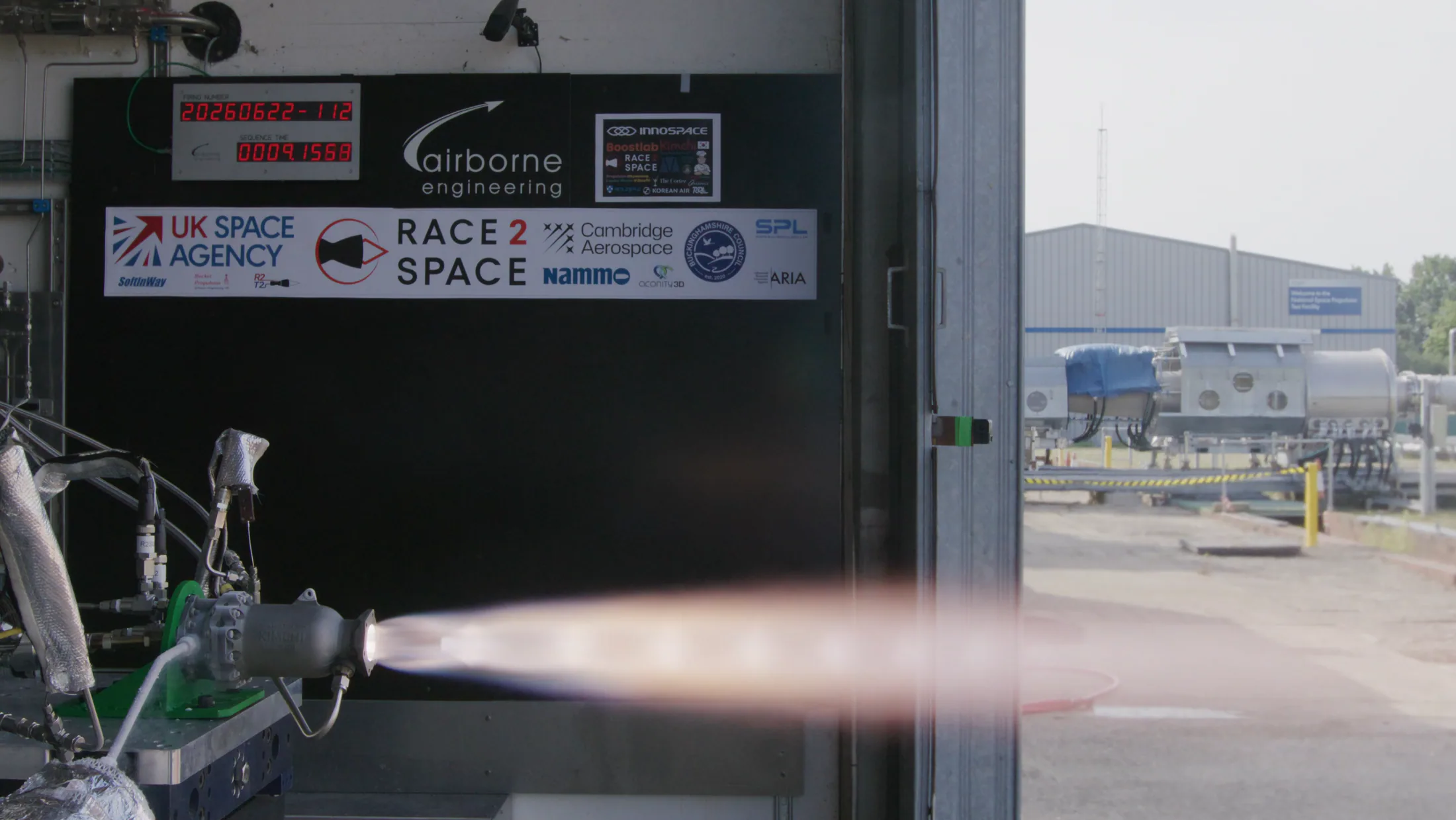
Design. Build. Integrate. Fire.
A six-month record of the Kimchi Engine—from design review and additively manufactured hardware in Korea to eight test iterations at a professional propulsion facility in the United Kingdom.
8
Test iterations
1.19 kN
Measured Test 8 thrust
13.46 s
Chamber-pressure response
57
Campaign media records
Campaign in brief
The result matters because every preceding system had to work together.
Race2Space is centered on propulsion-system verification rather than launching a complete vehicle. Teams pass preliminary and critical design reviews, close safety and facility interfaces, and then integrate their own hardware with a professionally operated test cell.
Kimchi Propulsion Systems brought a pressure-fed LOX/IPA engine with regenerative cooling and a two-part additively manufactured architecture. The campaign connected analytical work, real manufacturing limits, domestic preparation, field integration, repeated inspection, and data-backed decisions between tests.
Campaign path
From PDR to Test 8
Each gate narrowed the gap between an engine concept and hardware that could safely connect to a real test facility.
01 / 05 JAN 2026
PDR submitted
Initial 1.0–2.5 kN regenerative-cooling concept and development direction defined.
02 / APR 2026
CDR configuration fixed
The test engine converged on a smaller 1.3 kN design point and a revised injector architecture.
03 / JUN 2026
Inconel hardware completed
Two-part additively manufactured hardware moved through post-processing, assembly, and verification.
04 / 12–15 JUN
Domestic readiness campaign
Igniter and controls testing exposed a power-margin and communications weakness before main-engine firing.
05 / 19 JUN
Bristol technical exchange
Student teams compared propulsion hardware, packaging choices, and lessons learned face to face.
06 / 22 JUN
Race2Space Test 8
The campaign closed with sustained LOX/IPA combustion and a stable data window for performance analysis.
01 / Design evolution
A concept that changed as the constraints became real
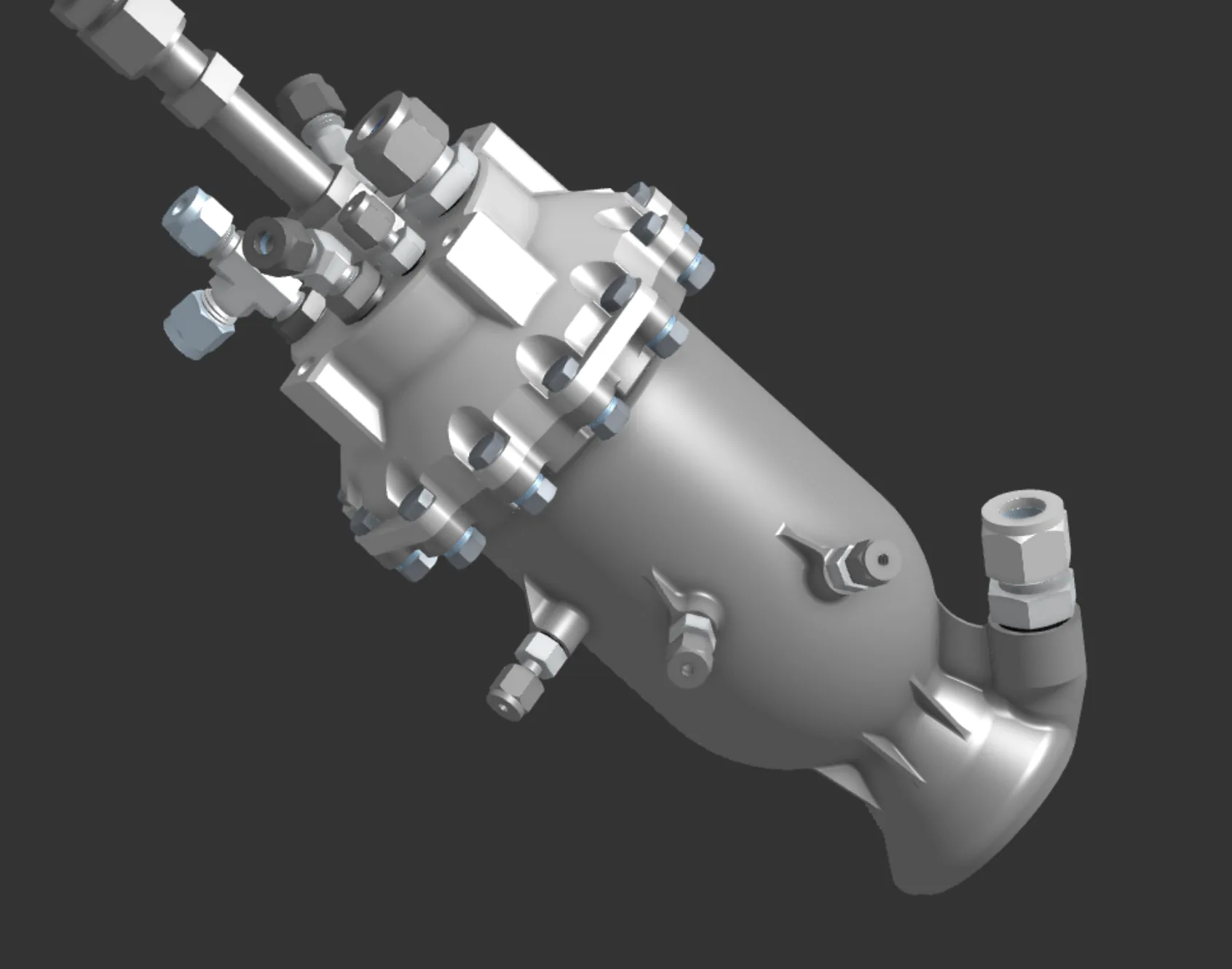
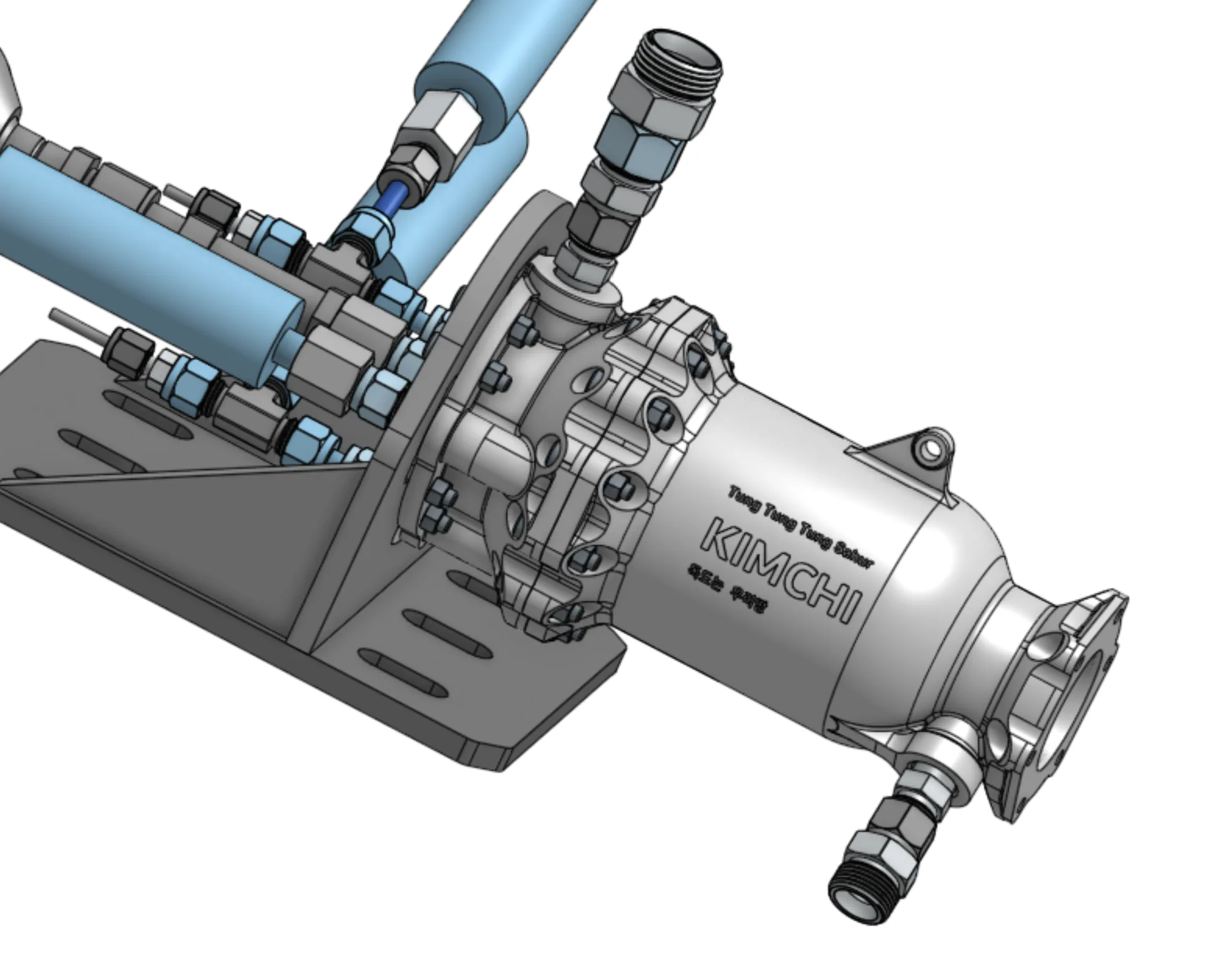
The PDR concept proposed a 1.0–2.5 kN engine with a broad operating range and a 103-element coaxial-shear injector. As the VTVL objective, manufacturing schedule, and facility interfaces became concrete, the CDR configuration converged on a smaller 1.3 kN design point with a different injector architecture.

02 / Manufacture & verify
Internal geometry had to remain inspectable and testable
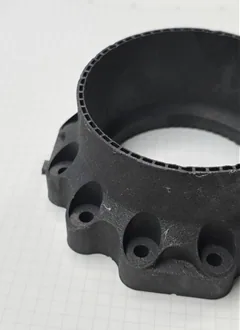
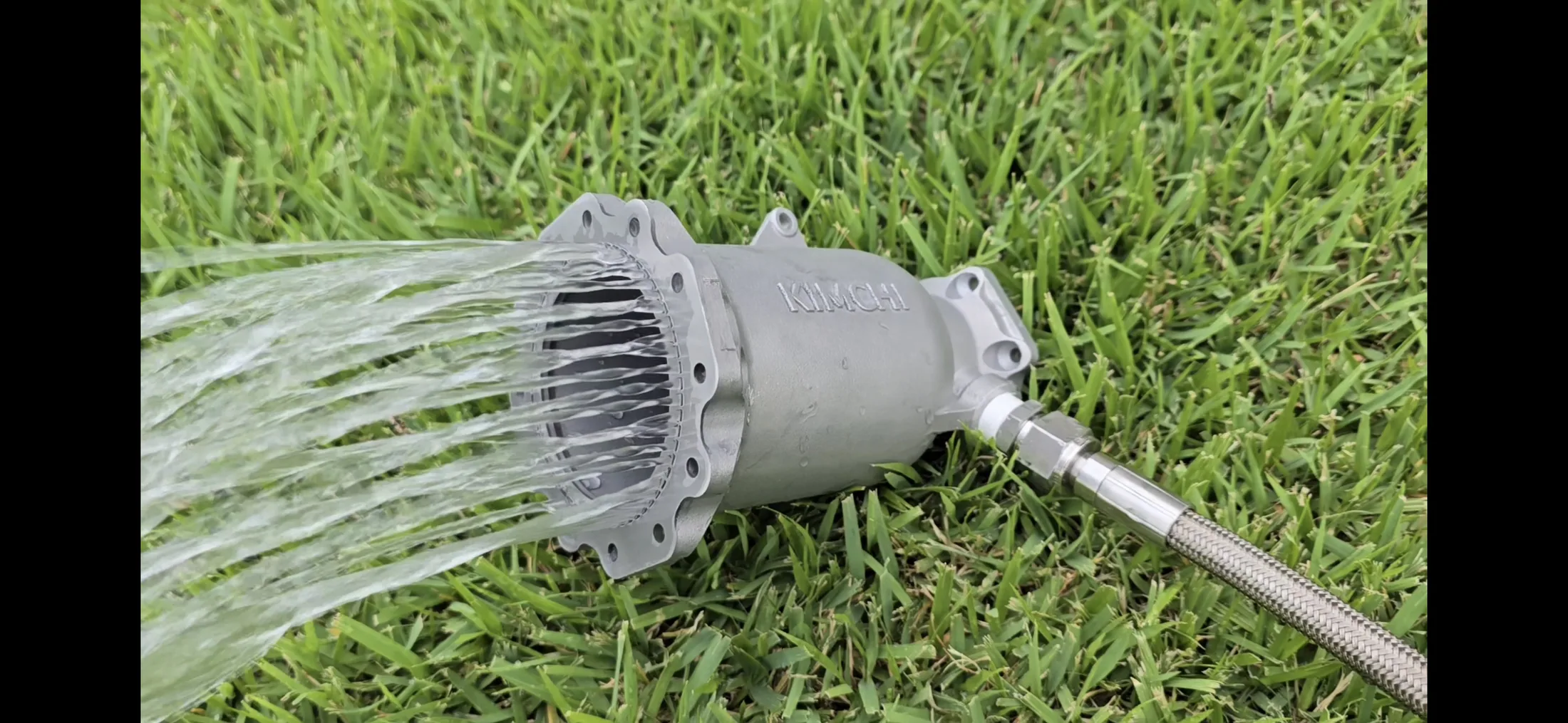
The final architecture placed 62 regenerative-cooling channels inside the chamber and nozzle wall and separated the injector from the chamber/nozzle body. Metal powder-bed fusion made the internal passages possible; the two-part structure preserved access for post-processing, inspection, assembly, water-flow checks, and a 50 bar hydrostatic leak test.
03 / Learn before firing
The domestic attempt revealed a systems problem, not a combustion result
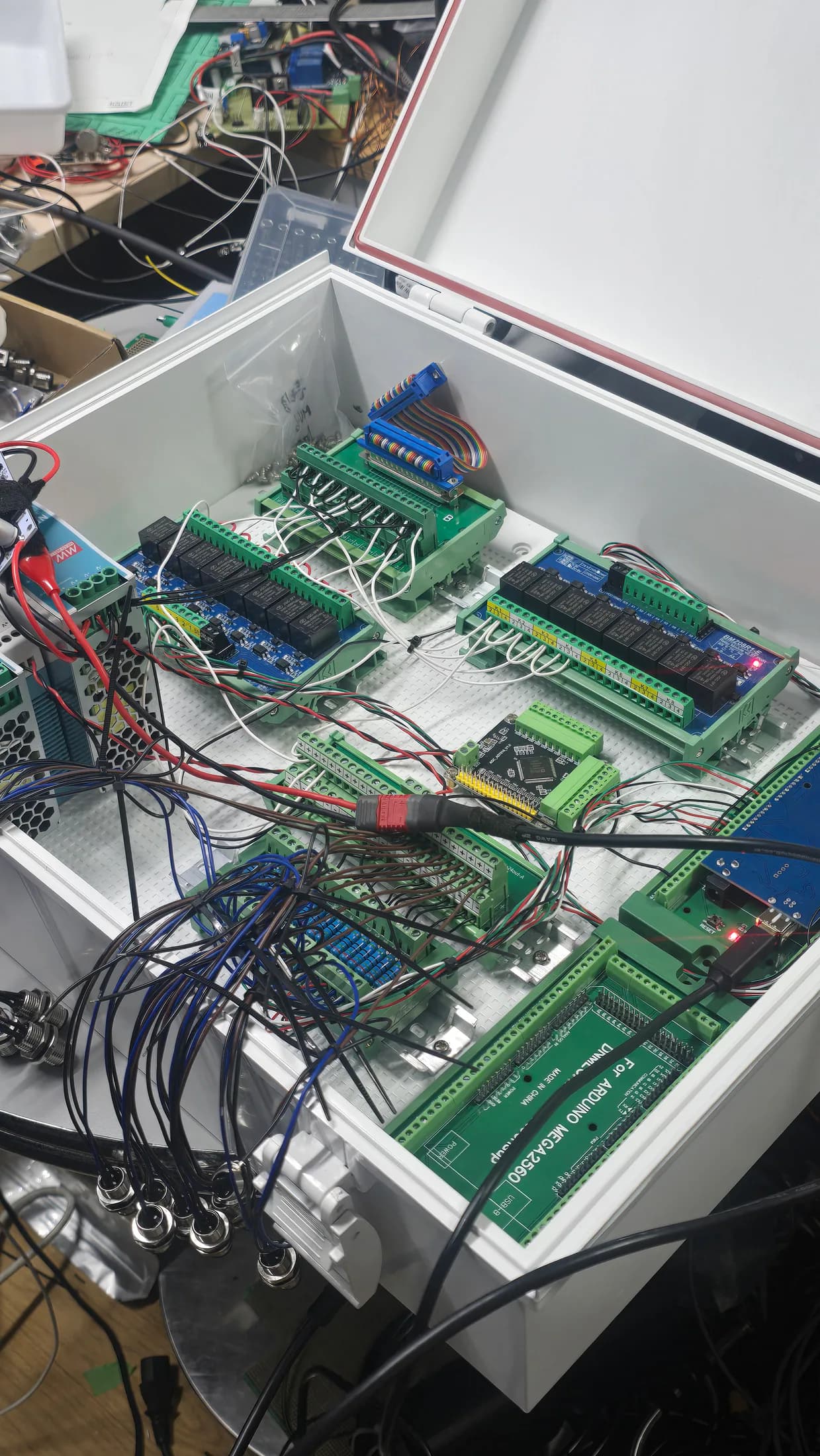
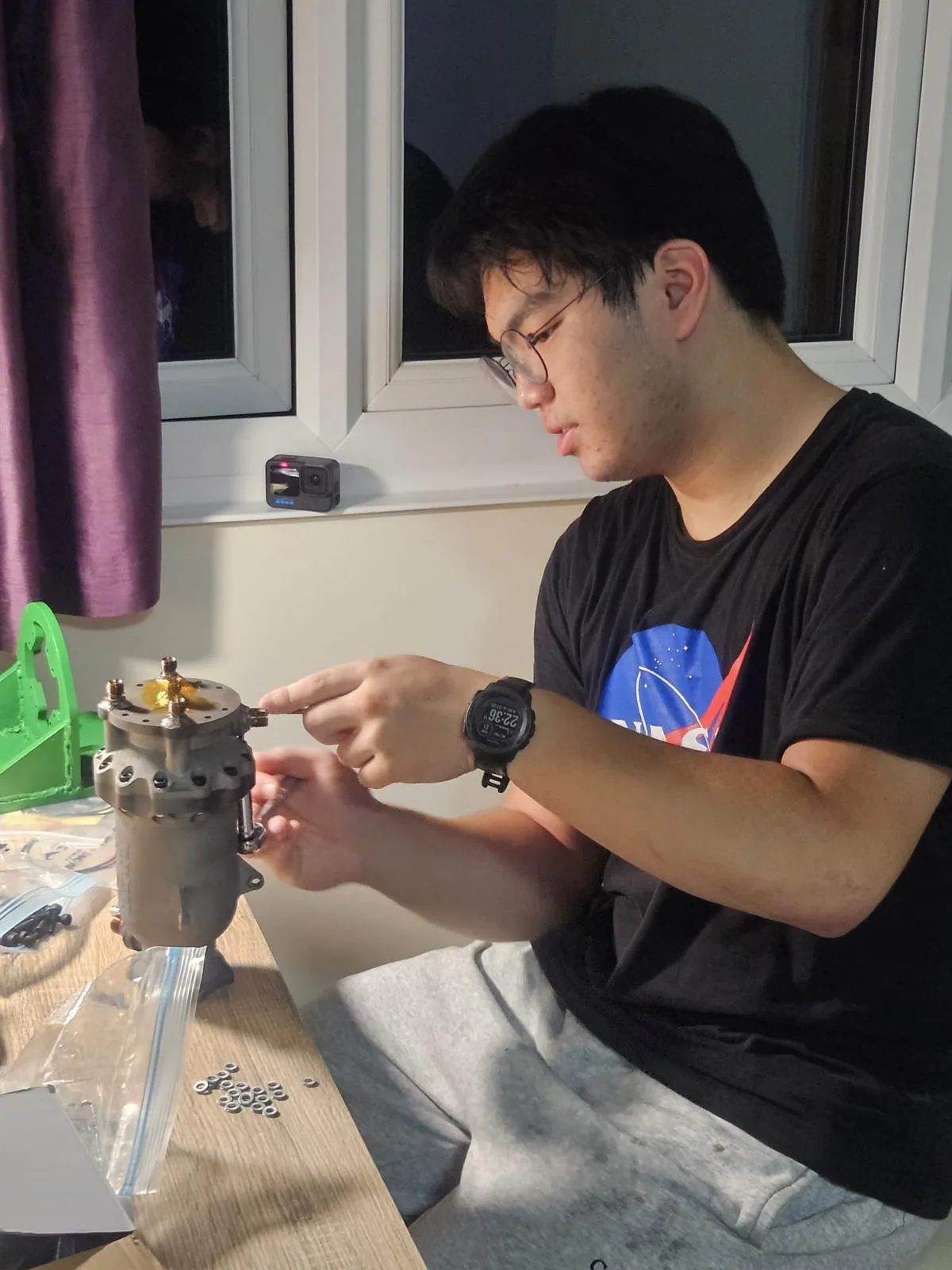
The Korean pre-test campaign was sequenced to verify the igniter before attempting the main engine. During the igniter test, insufficient controller power margin interrupted communications, so the main-engine run was stopped. The useful lesson was precise: power capacity, communication stability, and sequencing had to be treated as part of the propulsion system.
04 / Technical exchange
Compare real hardware, not only slides
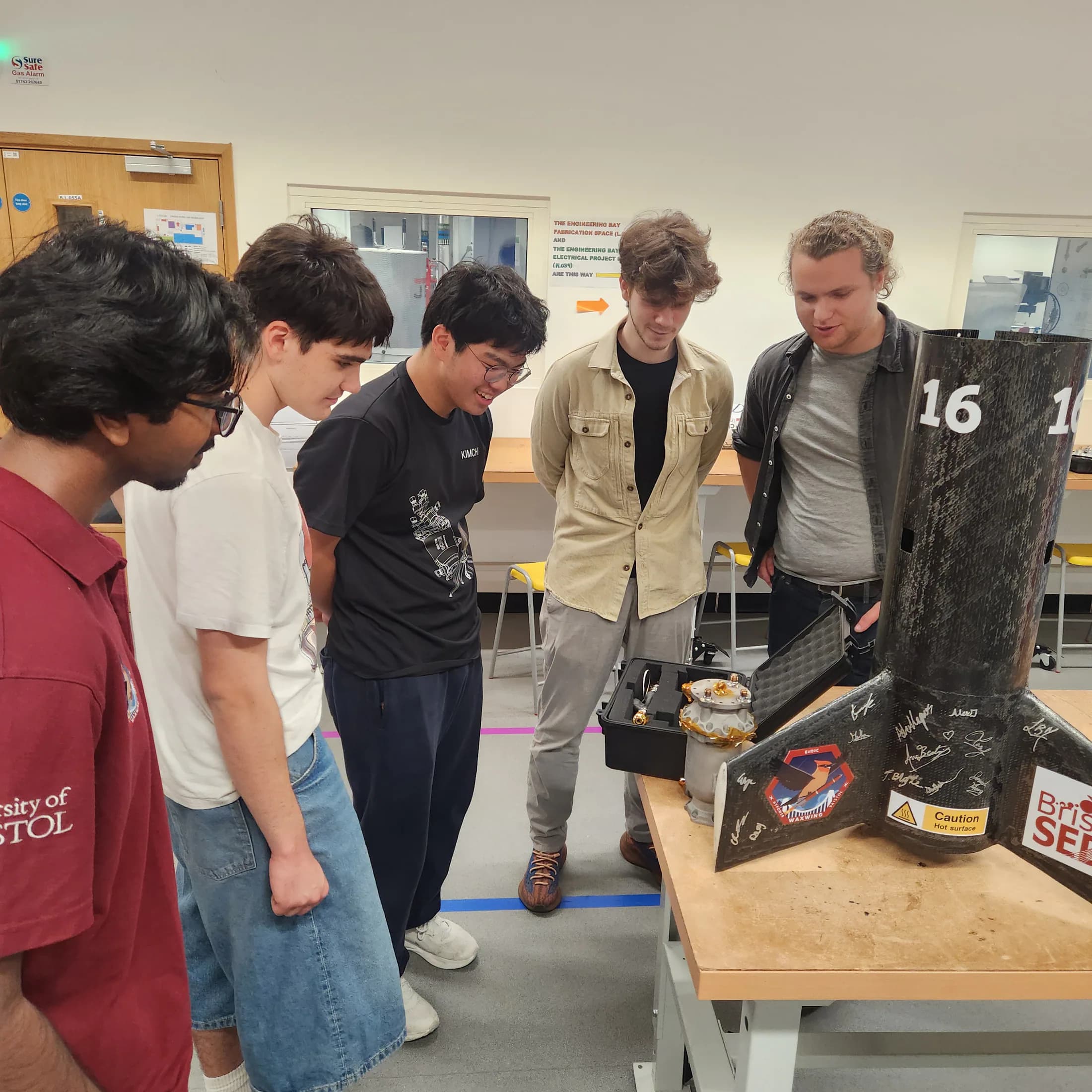
In Bristol, both teams placed injectors, chambers, and vehicle hardware on the table and compared design choices directly. The visit connected the Kimchi campaign with other approaches to cooling, injector geometry, tank packaging, and student-team iteration.
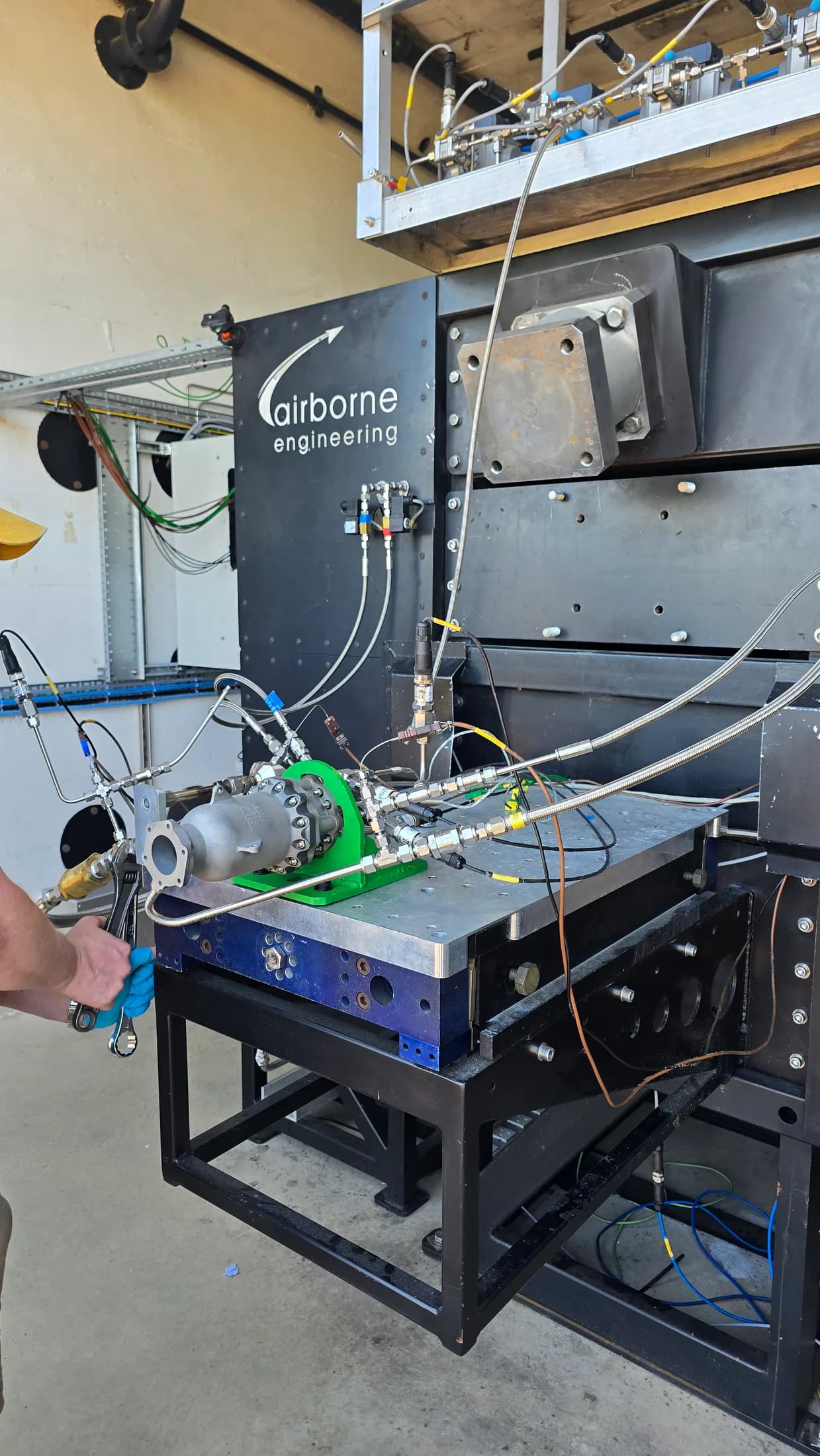
Campaign outcome
Test 8 produced the stable window needed for analysis.
The stored data shows roughly 13 seconds of chamber-pressure response. From T0+4.0 to 12.5 seconds, chamber pressure and thrust remained comparatively steady, allowing pressure, thrust, and mass flow to be evaluated on the same time axis. The ± values below describe temporal variation in that window, not full sensor uncertainty.
14.05 ± 0.18 bar(g)
Chamber pressure
1194 ± 33 N
Measured thrust
0.701 kg/s
Total mass flow
13.46 s
Pressure response
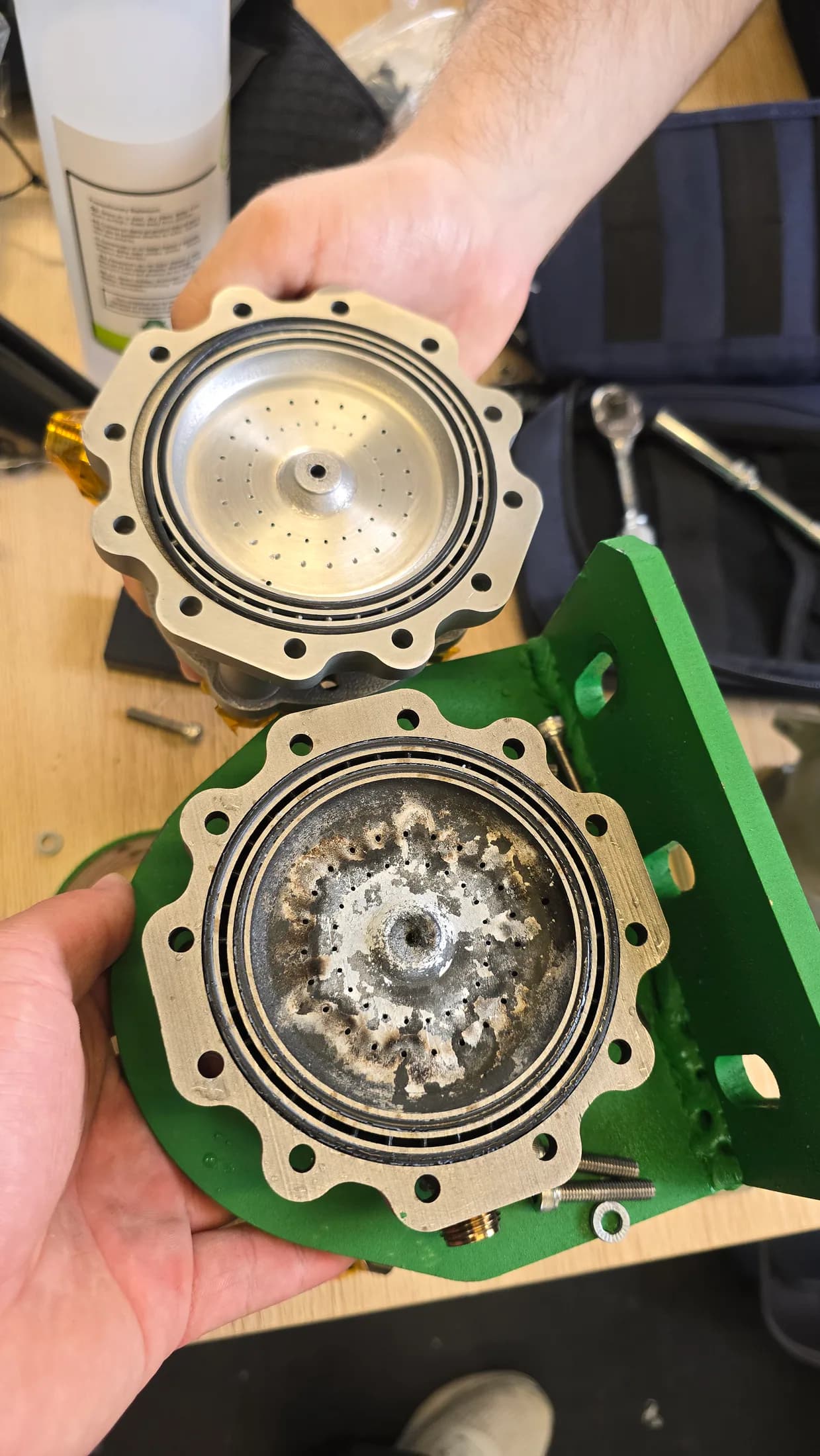
Complete visual record
The full campaign album
Every supplied photograph and video is included below. Filter by campaign stage, then open any image for a full-screen view.
56 photographs · 1 video · 6 stages
Domestic igniter test record
Technical record
Continue into the engineering documents
The album captures the campaign as it happened. The documents below preserve the design basis, the complete report, and the data-led comparison of Tests 1–8.
Media and campaign records: Kimchi Propulsion Systems, June 2026. Performance values were recalculated from the recorded Test 8 dataset.
Return to Liquid Propulsion →